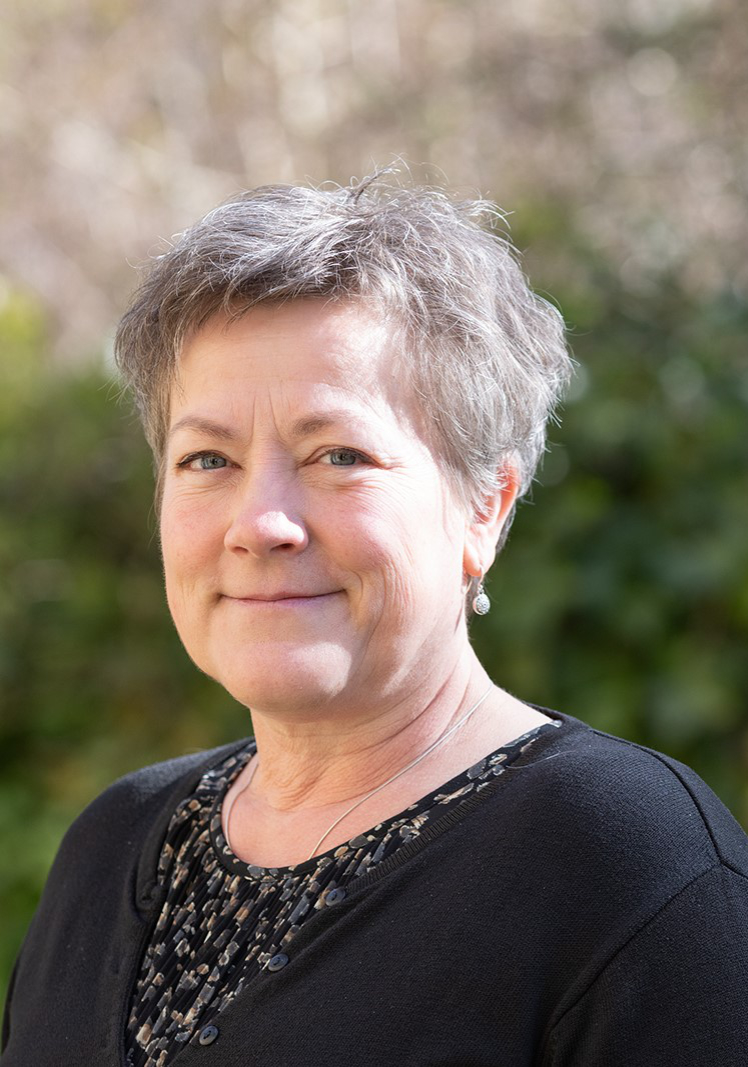
Insights from the Expert

Ms Bundgaard, what prompted Aalborg University Hospital to explore new approaches to instrument reprocessing?
The main reason was the move to a brand-new hospital and the establishment of a completely new Central Sterile Services Department (CSSD). Everything was new: the washer-disinfectors, the autoclaves, the workflows, and the physical layout.
Before introducing these new processes into routine operations, we needed to validate every step in order to ensure that the reprocessing of surgical instruments would meet the highest standards of quality, patient safety, and regulatory compliance. Because we had the opportunity to build everything from scratch, we also wanted to evaluate which processes and products would provide the best cleaning performance before carrying out the formal validation.
What role did you play during the testing phase of neodisher® MediClean advanced, and which aspects were particularly important to you?
I am a researcher and have worked in sterile science for the past 10 years. Through our Sterile Science research programme, we have developed scientific methods for evaluating cleaning quality and washer-disinfector performance. We realised that these methods could also support the clinical testing and validation of the new washer-disinfectors at Aalborg University Hospital.
The CSSD team was in a unique position because they were starting from scratch. Before validating the washer-disinfectors, they wanted to determine which cleaning processes would be worth implementing, and they invited us to collaborate.
It was a true partnership. The CSSD team, including the project engineer and quality control specialists, brought extensive practical experience and an in-depth understanding of the workflows while we provided the scientific methodology for determining what to measure, how to measure it, and how to interpret the results. Our role as researchers was to co-design the testing protocol and the subsequent validation strategy together with the CSSD team. We were also responsible for the laboratory analysis of protein residues using the bicinchoninic acid (BCA) assay.
Our main objective was to achieve the highest possible cleaning quality while maximising efficiency and minimising manual handling. We therefore focused on evaluating key variables such as ultrasonic cleaning, loading configuration, and washing programs as well as whether switching to neodisher® MediClean advanced from Dr. Weigert could further improve cleaning performance.
Who else was involved in the testing process?
The project brought together researchers, clinical staff, and industry experts. I worked closely with Assistant Professor Peter Rubak on the research aspects of the project. Lise Boel also recently joined our research group as a PhD student.
At the CSSD, we collaborated closely with department manager, Thomas Rendal, project engineer, Mads Tanggaard Okholm, and quality control specialists, Mette Hald Clausen and Diana Axelsen. During the practical testing, Mette and Diana performed the contamination and sample elution procedures before the samples were transferred to our laboratory for protein residue analysis using the BCA assay.
In your view, which factors are most important when hospitals evaluate new processes or products for reprocessing practices?
The single most important factor is collaboration. Successful implementation requires people with complementary expertise. The CSSD team understands the practical workflows, logistics, and day-to-day challenges while researchers contribute scientific methods that allow decisions to be based on objective evidence rather than assumptions.
Strong leadership is equally important. The involvement of the CSSD manager, Thomas Rendal, was essential because he was able to engage hospital management while also making the decisions needed to keep the project moving forward.
Finally, close collaboration with industry is invaluable. Manufacturers have extensive knowledge of their own products and can provide technical expertise that supports the optimisation of cleaning processes. When researchers, clinicians, hospital leadership, and industry work together, the result is much stronger than what any one group could achieve alone.
What were the outcomes of the testing?
The pre-validation testing allowed us to optimise the cleaning process before the formal validation. Based on the results, we implemented:
Together, these changes resulted in an efficient cleaning process with excellent cleaning performance while supporting high throughput in the CSSD.
What role does close collaboration between users, researchers, and industry play in projects of this kind?
It is absolutely essential. None of the stakeholders can achieve the best outcome alone. The users understand the clinical reality and day-to-day workflows. Researchers contribute objective testing methods and evidence-based decision-making while industry provides detailed knowledge of products and their intended use.
In our project, the collaboration with industry was particularly valuable. Jakob Andersen from Dorte Egelund ApS played an essential role by sharing his in-depth knowledge of neodisher® MediClean advanced, its properties, and how it could be integrated into different cleaning processes. His expertise was instrumental in our evaluation and ultimately in our decision to select neodisher® MediClean advanced as the detergent for the optimised cleaning process.
When these perspectives are combined from the beginning of a project, decisions are based on both scientific evidence and practical considerations. That leads to more robust validation, better implementation, and ultimately safer and more efficient medical device reprocessing.
What developments do you expect or hope to see in the future of medical device reprocessing?
I hope to see medical device reprocessing become increasingly evidence based. Many decisions are still based on tradition or local experience. I would like to see more hospitals using scientific methods to optimise and validate their cleaning processes before implementation.
I also expect greater use of digital monitoring, automation, and data-driven quality assurance, which will allow departments to routinely monitor and optimise performance rather than rely solely on periodic validation.
Global NEWS sincerely thanks you for the interview and for the insights into your work.
We would also like to thank Dennis Eisert, Ina Haacke, and Andreea Glatz from the Dr. Weigert team; their dedicated on-site support throughout the transition played an important role in the success of the project.
The interview was conducted by Linda Heitplatz
(Produktmanagement Private Label / Marketing).